Issue 5
nonfiction
Copyrighting, Right
Two years ago, a Chinese man surnamed Li helped make history. Paradoxically, he did so by following in the footsteps of many brave men who came before him. His quest: creating the perfect woman.
Li entered a string of prompts into Stable Diffusion, including “symmetrical, attractive face,” “Japan idol,” “perfect skin,” and “long legs.” Other iterations of his photo-creations demanded additional phrases like “lust, cool.” (The whole thing is sadly reminiscent of Luo Ji’s criteria for his ideal woman, who is conjured for him in Liu Cixin’s The Dark Forest.)
Once he was satisfied, Li titled the series “Spring Breeze Delivers Tenderness” (春风送来了温柔) and posted it to Xiaohongshu.
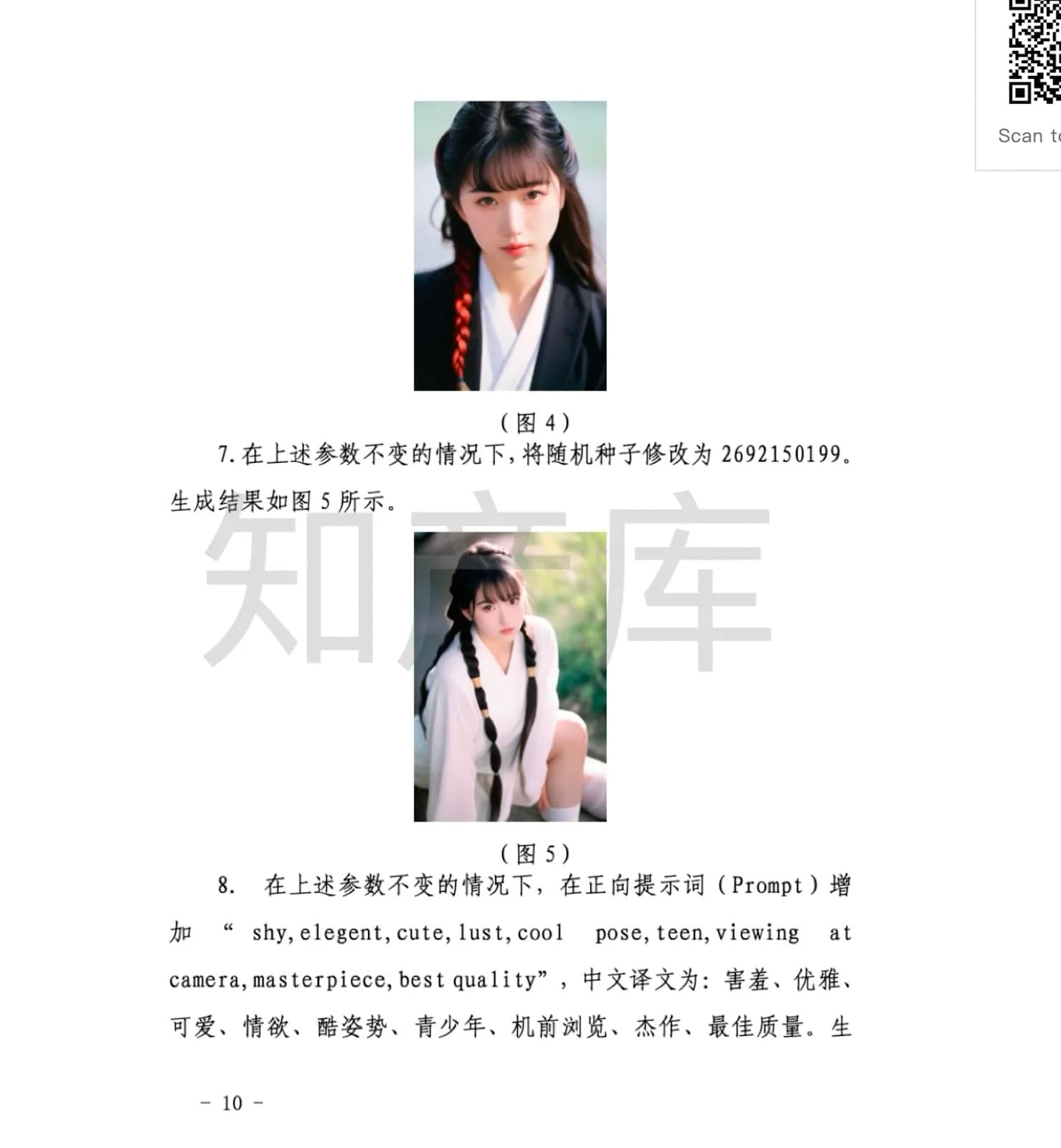
We are privy to Mr. Li’s Pygmalion process because it is outlined step-by-step in the judgment released by the Beijing Internet Court in November 2023. Li, the plaintiff in the case, filed suit against a defendant surnamed Liu, a woman who re-posted the photo creations he and Stable Diffusion made on the platform Baijiahao. The lawsuit alleges she did so without crediting him and without including the watermark he included in his Xiaohongshu post.
Liu’s defense included the fact that she accessed the photos through regular online search — wherein the source was unacknowledged. She also noted that since she did not use the photos for any commercial purpose, she believed she shouldn’t have to pay Mr. Li the 5,000 RMB his suit demanded.
The Court found that Li’s AI-generated creations meet the definition for “works” as defined by China’s Copyright Law, because they were deemed: (1) art; (2) original; (3) expressive; (4) an intellectual achievement. Liu was ordered to publicly apologize to Li within 24 hours and pay him 500 RMB.
Judge Ge Zhu, who heard arguments for Li’s case at the Beijing Internet Court, spoke about the deliberations at an event held in January 2024 by Hong Kong University Law School. Possibly to showcase China’s first-mover status ruling on a case related to copyright and AI-generated images, she walked us through the Court’s thinking on this issue.
“Firstly, we believe that giving authorship to people who use AI to generate images will encourage them to use AI to generate more creative works,” she said, showing her cards as at least somewhat pro-AI industry.
Then she really threw down the deck: “Secondly, we want to encourage users to use these tools more and therefore help the AI developers profit more as a result, creating a virtuous cycle of demand that would be good for the industry.”
She then got more speculative. Since it’s difficult to determine what is and isn’t AI, she said, only protecting art made without AI could incentivize people to conceal their use of AI products. Making AI-assisted art ineligible for copyright protection wouldn’t incentivize people to use AI less, her argument implies. It would just motivate them to lie about it.
There’s another reason Li’s case is noteworthy: he is no average Zhou. He’s a copyright lawyer focused on AI issues. (His colleagues at Beijing Tianyuan Law Firm represented him in court.) Li’s occupation suggests it was perhaps not perfect serendipity that landed him in the position to file and loudly win the first lawsuit related to AI-generated works’ fitness for copyright protection. It appears to have helped catapult him into his current legal speciality.
And, to his credit, he seems interested in less ick-inducing cases. For example, when social media users posted a deepfake image of a child being buried under the rubble of an earthquake in Tibet, he spoke out against sharing these types of damaging AI outputs (the photo was fake but the earthquake was real.)
In opposing dangerous deepfakes, Li cited the September 2024 draft measures for labeling made-with-AI “synthetic” content. Those measures require that certain AI-generated content be explicitly labeled as such. Deepfakes related to a national emergency would, for example, fall under that category.
Regulation in Action
The labeling measures build on other regulations China passed in recent years targeting generative AI, algorithmic recommendations, and “deep synthesis” (essentially deepfakes) which contain both productive protections and worrying overreach.
For example, among other stipulations, the deepfake regulations require AI platforms to prompt users who are manipulating individuals’ biometric data in order to create a deepfake to inform the people they’re attempting to make a deepfake of. That’s not quite banning the creation of deepfakes of real people, but it’s at least a required reminder to think twice before doing so.
They also, however, prohibit spreading “rumors” — which are functionally deemed as such by authorities. The Cyberspace Administration of China even setup a Rumor Refutation Platform (中国互联网辟谣平台) in 2018 for users to submit rumors and rat out their spreaders. That’s a clear opening for censorship, if the CCP needs one.
China’s interim measures for managing generative AI, which were released in July 2023, also have a clear upside: they state that intellectual property rights must be “respected” and dedicate a separate clause to prohibiting the infringement of IP rights “that are lawfully enjoyed by others.” That clause is specifically referring to the process of collecting training data—which is the subject of major U.S. lawsuits, including The New York Times’ suit against OpenAI.
Zhang Yanlai, reportedly described by those who know him as “a pioneer in cyber law,” got his start working on an IP dispute regarding licensing for background music that played in a Hangzhou tea house. He credits the forethought to look into copyright and AI to his “keen sense of smell.” While his claim that he was “chosen by the times”" is at best a bit much, Zhang deserves credit for successfully arguing in favor of personal privacy rights in China’s first-ever facial recognition case.
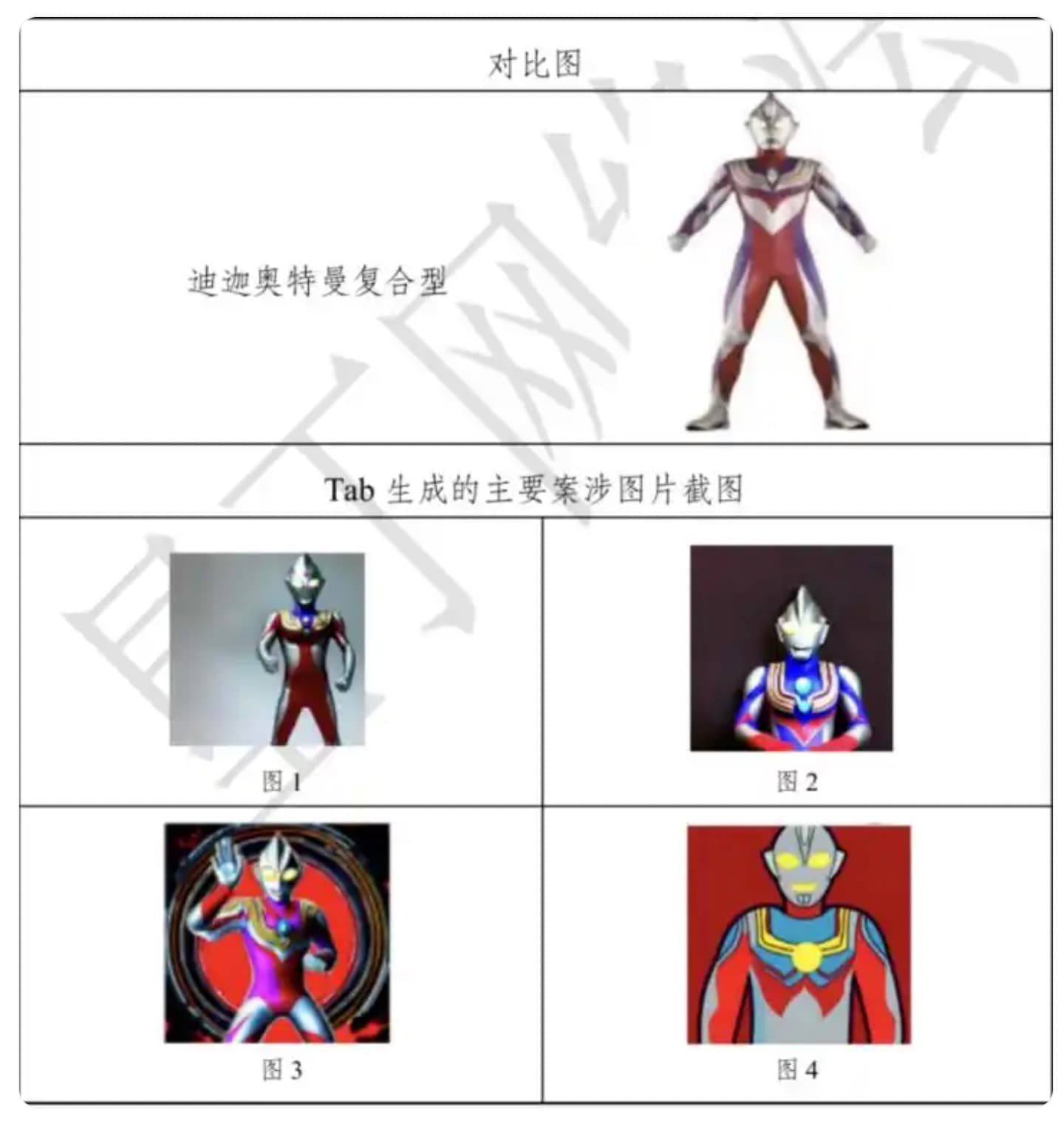
That wouldn’t be the last time Zhang scored an unprecedented win. In the first-ever case that found an AI firm guilty of copyright infringement, he represented a plaintiff whose IP was infringed upon through its response to a user’s prompt. In a case taken on by the Guangzhou Internet Court, 1300 miles away from the Beijing Internet Court where Li won copyright protections for his long-legged woman, Zhang represented Shanghai Xinchuanghua Culture Development Co., Ltd.
His client was an animation firm with exclusive rights to use the Ultraman character IP in China. The defendant was not the user who prompted the creation, but the AI platform itself. The accusation: the image generating service infringed on the Ultraman IP by coughing up Ultraman’s image when instructed to do so. Zhang won the case.
“Encouraging industry development does not mean allowing wanton infringement and ignoring the law,” he told Zhejiang Dailyw hen the ruling came out in February of last year. He added that AI firms should “develop healthily” and comply with relevant regulations. Echoing China’s generative AI regulations’ emphasis on placing the blame on “providers” rather than individuals, he added that it’s up to platforms to inform users of the infringement risks associated with using AI tools.
An Unlikely Takeaway
To the degree that the U.S. has its own Zhangs and Lis in the emerging field of AI and copyright law, they are working under conditions that are arguably less conducive — and certainly less clear-cut — than their Chinese counterparts. American lawyers have to rely on the traditional legal framework structured around intellectual property protections. Their regulatory tools are in major need of an update.
Maybe a greater understanding of how the sole other “AI superpower” is handling the issue could motivate a change. While the European Union gets (I think, partly unfairly) portrayed as excessively prone to regulation, American legal experts and lawmakers who are trained to dismiss China as authoritarian, Communist, and anti-industry should probably take a closer look. Like the U.S., China has a robust domestic industry at stake. So far at least, that has not resulted in giving up on copyright protections for the little guy.


Author
Johanna Costigan
Johanna M. Costigan is a writer focused on technology competition and development in the US and China. She writes a newsletter on science, technology, and history in China called The Long Game.

Editor
Tianyu Fang
Tianyu Fang is a writer and researcher. He’s an incoming PhD student in history of science at Harvard University. He is a member of the Reboot Editorial Board.